Global electricity demand is rising, and transformer infrastructure must keep pace. The International Energy Agency’s Electricity 2024 report warns that grid investment must accelerate to support new generation, electrification, and industrial growth. Transformers remain small-looking assets with enormous system responsibilities.
The U.S. Department of Energy’s transformer studies estimate that transformer losses consume a significant share of national electricity use. Even a fraction of one percent matters when equipment operates continuously. Martin J. Heathcote, author of The J&P Transformer Book, defines the principle clearly: “A transformer is a static device which transfers electrical energy from one circuit to another.” That simple sentence explains its importance.
This guide examines the seven best Type Of Transformer options for global buyers. The choices include power, distribution, dry-type, oil-immersed, isolation, autotransformer, and instrument transformers. Each serves a different electrical task. Each also carries different costs, maintenance needs, safety considerations, and installation limits.
A factory beside a humid coastline may need different protection than a data center in a dry inland climate. A utility substation values capacity and resilience. A hospital prioritizes isolation, continuity, and low fire risk. These details change the right answer.
No ranking is perfect. Transformer performance depends on voltage class, frequency, cooling method, load profile, local standards, and total ownership cost. Buyers should compare verified test results, efficiency data, service records, and supplier experience. A low purchase price can become expensive after years of losses, repairs, or downtime. The best choice is rarely universal. It is the most suitable match for the application.
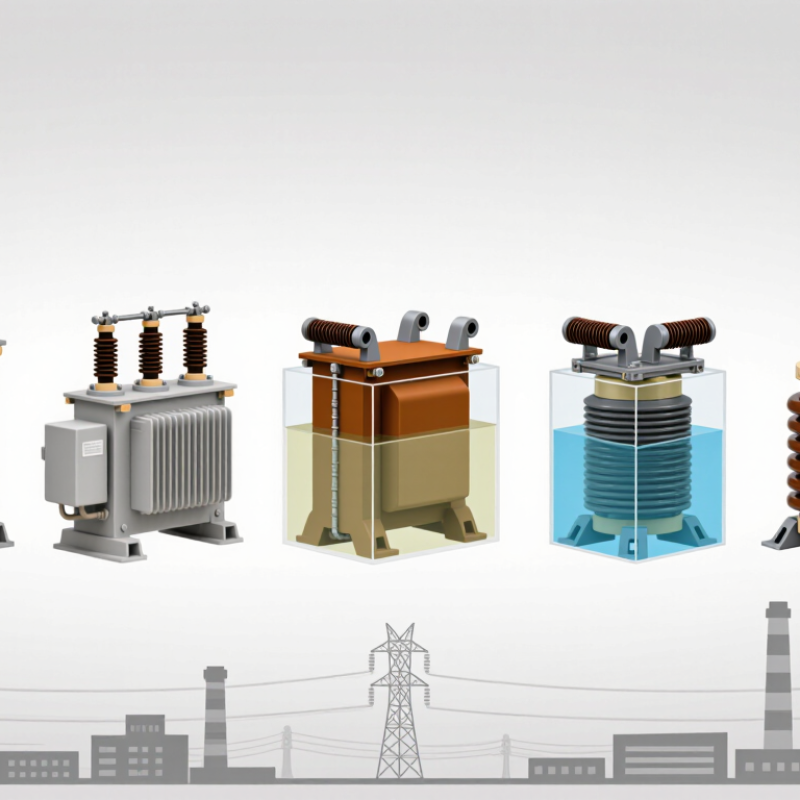
For global buyers, the seven strongest transformer choices are oil-immersed power, oil-immersed distribution, dry-type, cast-resin, amorphous-core, pad-mounted, and pole-mounted transformers. The best option depends on voltage, climate, fire risk, and installation access. IEC 60076-1 defines core requirements for power transformers, including ratings, insulation, and service conditions. IEEE C57 standards add practical guidance for testing, loading, and distribution performance.
A technical ranking should also examine efficiency at real operating loads. The U.S. Department of Energy’s 10 CFR 431 rules set minimum efficiency requirements for covered distribution transformers. DOE technical analyses show that transformer losses remain significant across long operating periods, even when loads are modest. Amorphous-core designs can reduce no-load losses, while dry-type and cast-resin units suit indoor or fire-sensitive locations. Oil-immersed designs often provide stronger cooling and higher capacity. Pad-mounted and pole-mounted units simplify local distribution, but weather exposure demands careful enclosure and corrosion checks. IEEE C57 guidance is especially useful when comparing temperature rise, short-circuit strength, and routine test evidence.
Tips: Request IEC 60076-1 test records, relevant IEEE C57 reports, and a clear DOE 10 CFR 431 efficiency statement. Confirm whether efficiency data uses 50 Hz or 60 Hz. Check altitude, humidity, salt exposure, and actual load profile. IEA’s Electricity Grids and Secure Energy Transitions report estimates annual grid investment must rise to over 600 billion dollars by 2030. That pressure rewards efficient equipment. Still, ranking only by purchase price is a weak method. Field experience suggests service access can matter more than a small efficiency difference.
Technical screening based on reference relevance to IEC 60076-1, the IEEE C57 family, and U.S. DOE efficiency requirements under 10 CFR Part 431.
The score represents the number of listed regulatory or technical reference frameworks that are normally relevant to the transformer category: 1 point for IEC 60076-1, 1 point for IEEE C57, and 1 point for DOE 10 CFR Part 431. A DOE score applies mainly to covered distribution transformers sold in the United States; final applicability depends on rated voltage, frequency, capacity, construction, and equipment definition.
Global buyers need to match transformer design with load, climate, safety rules, and maintenance capacity. The IEA Electricity 2024 report projects global electricity demand growth of about 4% annually through 2026. That growth increases pressure on aging networks and replacement planning.
Power transformers handle high-voltage transmission and large substations. Distribution transformers reduce voltage for buildings, factories, and local grids. Oil transformers offer strong cooling and high capacity, but they require spill control and regular inspection. Dry-type transformers avoid insulating liquid and suit indoor facilities, hospitals, and fire-sensitive sites. The U.S. Department of Energy’s transformer efficiency studies emphasize that lifetime losses matter, not only purchase price.
Auto transformers use less material and provide efficient voltage adjustment, yet they do not offer electrical isolation. Isolation transformers separate circuits and can reduce transferred electrical noise. They are useful around sensitive medical, laboratory, and control equipment. Toroidal transformers have compact cores and low stray magnetic fields, although winding quality and thermal design remain critical.
A practical choice.
IEC 60076 testing principles help buyers compare insulation, temperature rise, short-circuit strength, and routine test evidence. Oil-filled units may suit outdoor substations, while dry units simplify indoor installation. I have seen buyers overvalue compact size and undervalue heat, harmonics, and service access. That judgment often becomes expensive. Local grid codes, ambient temperature, altitude, noise limits, and future load growth should shape the specification, not catalogue appearance.
| Transformer Type | Typical Function | Common Capacity Range | Cooling / Insulation | Typical Voltage Use | Main Advantages | Main Limitations | Best-Suited Applications |
|---|---|---|---|---|---|---|---|
| Power Transformer | Transfers electrical energy between high-voltage transmission networks and major substations. | Typically several MVA to several hundred MVA. | Usually oil-immersed with radiator cooling; forced cooling may be used at higher ratings. | Commonly above 33 kV, including transmission and sub-transmission levels. | High efficiency, strong overload capability, and suitability for grid-scale power transfer. | High purchase cost, large footprint, substantial installation requirements, and oil-management needs. | Power plants, transmission substations, renewable-energy collection systems, and utility grids. |
| Distribution Transformer | Reduces medium voltage to utilization voltage for end users. | Typically about 25 kVA to 5 MVA, depending on network design. | Oil-immersed or dry-type construction; natural cooling is common. | Often medium-voltage inputs such as 6–35 kV with low-voltage outputs. | Reliable voltage conversion, broad availability, and efficient continuous operation. | Performance depends on loading; no-load losses can remain significant over long operating periods. | Commercial buildings, factories, residential developments, farms, and local utility networks. |
| Oil-Immersed Transformer | Uses insulating liquid for electrical insulation and heat transfer. | Available from small distribution ratings to utility-scale power ratings. | Mineral oil or other approved insulating fluid; radiators and conservators may be used. | Low-voltage, medium-voltage, and high-voltage systems, subject to design and standards. | Good thermal performance, compact active parts, high overload tolerance, and long service potential. | Fire and environmental controls are required; leaks, fluid testing, and maintenance must be managed. | Outdoor substations, utility distribution, industrial facilities, and high-capacity installations. |
| Dry-Type Transformer | Provides voltage conversion without liquid insulation. | Commonly from several kVA to a few MVA; larger designs are also available. | Air-cooled; windings may be vacuum-cast resin or varnish-impregnated. | Common in low- and medium-voltage indoor systems. | No liquid-leak risk, reduced fire hazard, simpler indoor installation, and low routine maintenance. | May be larger or noisier at an equivalent rating; ventilation and dust control are important. | Hospitals, data centers, high-rise buildings, tunnels, factories, and indoor substations. |
| Autotransformer | Changes voltage through a single continuous winding with a shared electrical connection. | Available across a wide range, from equipment voltage regulators to large grid units. | Air-cooled or oil-immersed, depending on rating and application. | Best when input and output voltages are relatively close, such as 400/230 V or 220/110 V systems. | Lower material cost, smaller size, higher efficiency, and better voltage regulation than a similarly rated two-winding unit. | Does not provide galvanic isolation; a fault can transfer between the input and output circuits. | Motor starting, voltage adjustment, laboratory equipment, and closely related transmission voltages. |
| Isolation Transformer | Transfers power between electrically separate primary and secondary circuits. | Commonly used from a few hundred VA to several tens of kVA; larger units are application-specific. | Usually air-cooled with varnish, epoxy, or other solid insulation. | Typical single-phase ratios include 1:1; other ratios are designed for the required system voltage. | Improves safety, reduces some conducted noise, and separates sensitive loads from the supply. | Adds cost and losses; it does not automatically regulate voltage or eliminate all electromagnetic interference. | Medical equipment, testing benches, control systems, audio systems, and sensitive electronic loads. |
| Toroidal Transformer | Uses a ring-shaped magnetic core to provide step-up, step-down, or isolation service. | Commonly from a few VA to several kVA; specialized larger designs are possible. | Normally air-cooled with enamelled windings and a laminated or wound magnetic core. | Commonly used in low-voltage single-phase equipment and power supplies. | Compact shape, low audible hum, relatively low stray magnetic field, and good efficiency at suitable loads. | Can have high inrush current and may require careful mounting, fusing, and mechanical design. | Audio equipment, instruments, control panels, lighting systems, and compact electronic devices. |
Note: Capacity, voltage, efficiency, insulation class, temperature rise, sound level, and protection requirements vary by design. Buyers should verify the applicable local grid requirements and standards, such as IEC, IEEE, or national regulations, before selecting a transformer.
Global buyers often compare seven transformer types, but fire performance can change the decision quickly. Oil-immersed units usually offer strong efficiency and compact size. However, their insulating liquid adds fire-load concerns inside substations. IEC 60076-2 mainly addresses temperature-rise testing for liquid-immersed transformers. It does not, by itself, certify complete fire safety.
Dry-type transformers remove liquid leakage risks. Cast-resin and air-insulated designs suit hospitals, commercial towers, tunnels, and indoor plants. IEC 60076-11 covers dry-type transformer requirements, including thermal performance and fire-behavior classifications.
Buyers should request the exact test class, test conditions, and cooling arrangement. Do not accept a vague “flame resistant” statement.
Details matter. A factory report should show winding temperature, ambient conditions, overload limits, and test duration.
For oil units, check the liquid type, flash point, fire point, bund capacity, and separation distance.
For dry units, inspect resin quality, ventilation paths, enclosure rating, and cleaning access.
A crowded room can defeat a good design. Real sites are imperfect. Dust, blocked louvers, and poor cable routing may raise temperatures beyond the laboratory result. Experienced engineers compare IEC data with local fire codes, protection settings, and emergency access before selecting the transformer. Safety is never just a brochure line.
Among the seven common transformer types, special applications often determine the best choice. An autotransformer uses one continuous winding with selectable tap ratios. It can convert 400 volts to 230 volts efficiently, while using less copper and space. However, it does not provide galvanic isolation. That limitation can affect equipment safety, service procedures, and sensitive control circuits. Ratio accuracy also changes with load. A catalogue calculation may look perfect, yet field voltage can still drift.
An isolation transformer uses separate primary and secondary windings. It blocks a direct conductive path and can reduce certain noise problems. Medical, laboratory, and industrial control equipment may require this arrangement.
A toroidal transformer has a ring-shaped core and short magnetic paths. Its losses and audible hum can be low when designed correctly. Still, inrush current may be surprisingly high. A larger fuse is not always the right answer. Core material, winding tension, ventilation, and actual load behavior need inspection.
Tips: Confirm the input voltage, frequency, output tolerance, insulation class, and required power. Ask for no-load and full-load measurements. Check the autotransformer ratio under real load conditions. For toroidal units, measure startup current before selecting protection. Leave ventilation space around the enclosure. Do not assume a smaller transformer is automatically better. That assumption is common, and sometimes costly. Local installation rules and qualified testing remain essential for reliable global procurement.
For global purchasing, transformer selection starts with the load, not the catalog. Common choices include dry-type, oil-immersed, isolation, autotransformer, toroidal, control, and distribution transformers. Each suits a different installation.
Dry-type units fit indoor electrical rooms. Oil-immersed models often support larger outdoor loads. Isolation transformers improve separation between sensitive equipment and supply circuits. Autotransformers can reduce cost, but they provide less electrical isolation.
Check the required kVA carefully. A unit running near full capacity may overheat during motor starting or seasonal demand. Leave practical headroom, but avoid extreme oversizing. It increases purchase and operating costs. Confirm whether the destination uses 50 Hz or 60 Hz. Frequency mismatch can affect temperature, noise, and performance.
Never assume voltage compatibility from a similar-looking plug. Verify primary voltage, secondary voltage, phase, tap settings, and connection method with site measurements.
Efficiency matters across thousands of operating hours. Ask for efficiency data at realistic loading, not only at the ideal test point. IP ratings also deserve attention. An indoor dry room may need limited protection, while dust, rain, or washdown areas require higher protection.
Evaluate total cost of ownership, including freight, installation, losses, inspection, replacement parts, and disposal. A cheaper transformer can become expensive after several years. One imperfect assumption remains common: buyers often compare only the nameplate price. That shortcut can distort the entire decision.