Leave Your Message

China Top 10 Box Type Substation Series Manufacturers

China’s Box Type Substation Series industry is expanding with grid modernization, renewable integration, and rising urban electricity demand. The IEA’s Electricity 2024 report projects that China will drive more than half of global electricity demand growth through 2026. This pressure requires compact, safe, and dependable distribution equipment.

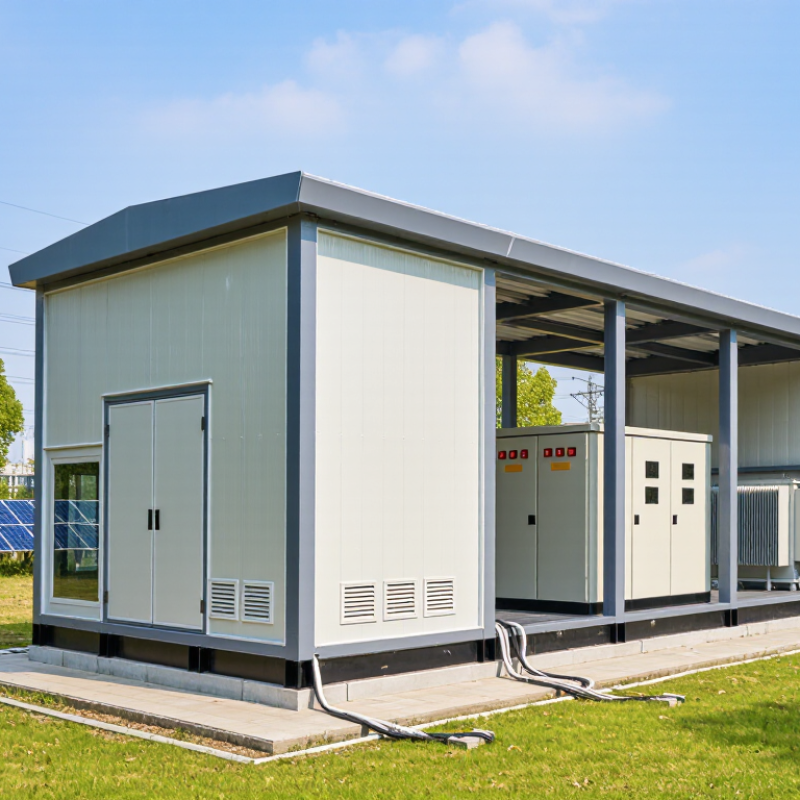
A box type substation combines a transformer, high-voltage switchgear, low-voltage equipment, protection devices, and an outdoor enclosure. Its design can reduce installation space and simplify deployment near factories, solar parks, rail systems, and commercial buildings. China Electricity Council industry statistics also show the continuing scale of national power infrastructure investment and equipment demand. However, production volume alone does not prove technical quality.

This China Top 10 Box Type Substation Series Manufacturers overview focuses on practical indicators. These include transformer efficiency, enclosure protection, temperature control, factory testing, certification, export experience, and after-sales support. Relevant evaluation should consider IEC 60076, IEC 62271, and applicable Chinese GB standards. Project references matter too. A substation may look excellent in a brochure, yet perform differently under dust, humidity, heat, or unstable loads.

The ranking is not official. It reflects publicly available evidence and may change as manufacturers update their products. That limitation deserves attention. Buyers should verify test reports, factory capabilities, warranty terms, and local compliance before signing contracts. The strongest suppliers usually provide clear technical drawings, routine test records, protection coordination data, and responsive commissioning support. Small details often decide long-term reliability.
China Top 10 Box Type Substation Series Manufacturers

China’s Top 10 Box-Type Substation Manufacturers: 10–35 kV Product Range

China’s Top 10 Box-Type Substation Manufacturers: 10–35 kV Product Range

China’s 10–35 kV box-type substation sector supports industrial parks, renewable projects, rail systems, and urban distribution upgrades. The National Energy Administration reported that China’s electricity consumption reached about 9.85 trillion kWh in 2024, rising 6.8% year on year. This demand strengthens the need for compact, factory-tested distribution equipment. A credible Top 10 shortlist should assess production capacity, 10 kV, 12 kV, 24 kV, and 35 kV coverage, transformer efficiency, enclosure protection, and documented field performance.

Standards matter here. IEC 62271-202 covers high-voltage prefabricated substations, while GB/T 17467 supports technical evaluation in China. Manufacturers with strong engineering records normally provide temperature-rise tests, insulation reports, partial-discharge data, and verified short-circuit withstand results. They should also demonstrate safe cable access, corrosion-resistant cabinets, clear maintenance space, and reliable protection coordination. Small details matter.

Public catalogues can mislead.

The China Electricity Council’s annual power-industry data shows continued expansion in grid and generation assets, but national statistics do not directly prove supplier quality. Buyers should compare test certificates, delivery records, after-sales response, and actual operating environments. A 35 kV unit for a dusty industrial site needs different ventilation and sealing decisions from a clean urban installation. This is where many rankings remain imperfect. Price and rated capacity are easy to compare; long-term thermal performance is not. A careful evaluation should therefore combine laboratory evidence with site experience, rather than treating a sales brochure as final proof.

Box-Type Substation Structure, Ratings, and 50/60 Hz Operating Principles

China Top 10 Box Type Substation Series Manufacturers

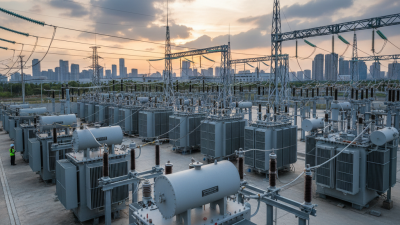
Box-type substations combine a medium-voltage switchgear room, transformer, and low-voltage panel inside a compact enclosure. Typical distribution models cover 6–35 kV and 50–2,500 kVA, depending on local demand. IEC 62271-202 defines key requirements for high-voltage prefabricated substations, including enclosure safety, temperature rise, and service conditions. The International Energy Agency’s Electricity 2024 report expects global electricity demand to grow by about 4% annually through 2026. Reliable compact substations therefore matter in factories, solar parks, and urban projects.

Their operating principle is straightforward. At 50 or 60 Hz, alternating voltage creates magnetic flux in the transformer core. The turns ratio reduces medium voltage to usable low voltage. A 60 Hz unit may need different core design than a 50 Hz unit. Frequency changes affect flux density, losses, noise, and heating. Ratings should include primary voltage, secondary voltage, insulation level, impedance, short-circuit withstand, and cooling method. IEC 60076-1 provides the main transformer rating framework. In practice, catalog values can look precise, yet installation altitude and ventilation may reduce real capacity. That point is easy to miss.

Tips: Check the actual load profile, not only the peak nameplate. Confirm frequency before ordering. Request temperature-rise test records, ingress protection details, and verified fault-current data. Leave service clearance around doors and radiators. A smaller footprint is useful, but cramped maintenance space creates avoidable risk.

China Top 10 Box-Type Substation Series Manufacturers: Structure, Ratings, and 50/60 Hz Operation

The chart presents representative transformer capacity ratings commonly used in prefabricated box-type substations. Typical medium-voltage inputs are 6–10 kV, 10–20 kV, or 20–35 kV, while low-voltage outputs are commonly 400 V or 415 V at 50 Hz and 480 V at 60 Hz. A box-type substation normally integrates the medium-voltage switchgear, transformer, low-voltage distribution equipment, protection, and metering sections inside a compact enclosure. The rated frequency must match the power system because transformer magnetic flux is determined by the applied voltage-to-frequency ratio.

IEC 62271 Compliance, IP54 Protection, and Safety Design Requirements

China Top 10 Box Type Substation Series Manufacturers

IEC 62271 compliance should guide every box type substation evaluation. IEC 62271-200:2021 covers metal-enclosed switchgear above 1 kV and up to 52 kV. It addresses insulation, temperature rise, mechanical operation, and internal arc performance. A certificate alone is not enough. Buyers should verify the tested configuration, rated voltage, current, and short-circuit duration. Small changes in busbar layout may affect test validity.

IP54 protection is also frequently misunderstood. The first digit limits dust ingress, while the second protects against water splashes from all directions. It is not waterproof. In coastal or dusty areas, enclosure coating, cable glands, ventilation filters, and drainage details need inspection. The IEA Electricity 2024 report forecasts around 4% annual global electricity demand growth through 2026. This pressure increases the need for compact, dependable distribution equipment. However, faster demand does not justify weaker verification.

Tips: Request the full type-test report, not only a certificate. Check internal arc class, enclosure material, earthing continuity, and door-locking performance. Ask for factory inspection records and routine-test data. A useful review includes thermal imaging during commissioning. Even experienced teams can overlook condensation inside the enclosure. That mistake is costly. Manufacturers ranked among China’s leading suppliers should provide traceable drawings, clear maintenance access, and evidence from accredited laboratories. Sales language may sound precise, but field performance still depends on installation quality, cable sealing, and local climate.

Comparing Top Manufacturers by Capacity, Efficiency, Monitoring, and Service

China’s top box type substation manufacturers should be compared beyond name recognition. Capacity matters, but site conditions matter more. A 630 kVA unit may suit a commercial building, while factories often require 1,600 kVA or higher. Buyers should check overload tolerance, enclosure protection, temperature rise, and short-circuit ratings against IEC 62271-202 requirements.

Efficiency deserves careful measurement. The International Energy Agency reports that global grid investment must exceed 600 billion dollars annually by 2030. This pressure makes low-loss transformers increasingly important. Compare no-load and load losses using consistent test conditions. A smaller loss figure can reduce operating costs for years. However, catalog efficiency may not reflect dusty rooms, high ambient temperatures, or frequent load changes. That is where evaluations become imperfect.

Monitoring separates basic equipment from service-ready equipment. Useful systems record temperature, humidity, partial discharge indicators, and breaker status. Data should be accessible through secure industrial communication protocols. The International Energy Agency also identifies digitalisation as essential for improving grid visibility and flexibility. Service quality remains equally practical. Ask about factory acceptance testing, spare-part availability, remote diagnostics, and response times. A strong manufacturer provides clear wiring diagrams and readable maintenance records. Check the details.

Reported capacity is easy to advertise. Proven field support is harder to verify. Independent test certificates, documented projects, and measured loss data provide stronger evidence than promotional claims. Some comparisons still overvalue purchase price. That mistake can become expensive during ten years of operation.

China Top 10 Box Type Substation Series Manufacturers - Comparing Top Manufacturers by Capacity, Efficiency, Monitoring, and Service

Comparison basis: The table presents anonymized supplier profiles using realistic industry specification ranges commonly published for medium-voltage box type substations. Values are indicative benchmarks rather than company-specific claims. Actual performance depends on transformer design, voltage level, enclosure configuration, climate, and project requirements.
Profile Typical Capacity Range MV / LV Configuration Peak Transformer Efficiency Enclosure Rating Monitoring Capability Protection Features Typical Application Service and Delivery Benchmark
Supplier Profile 01 100–2,500 kVA 6–35 kV / 0.4 kV; oil-immersed or dry-type 98.6–99.3% IP54–IP65 Temperature, oil level, load current, voltage, energy meter, RS485/Modbus Overcurrent, short-circuit, surge, over-temperature, pressure relief Utility distribution, industrial parks, renewable-energy collection Estimated 6–10 weeks; remote commissioning support available
Supplier Profile 02 50–1,600 kVA 6–24 kV / 0.4 kV; compact integrated design 98.4–99.1% IP54–IP65 Digital multifunction meter, local display, optional gateway Fuse protection, breaker trip, temperature alarm, lightning protection Commercial buildings, residential developments, public facilities Estimated 5–9 weeks; standard drawings supplied before production
Supplier Profile 03 200–3,150 kVA 10–35 kV / 0.4 kV; high-capacity oil-filled units 98.8–99.4% IP55–IP66 SCADA-ready RTU, transformer temperature, power quality and event logging MV load-break switch, circuit breaker, differential or relay protection options Manufacturing plants, data infrastructure, large infrastructure projects Estimated 8–14 weeks; factory acceptance testing commonly offered
Supplier Profile 04 100–2,000 kVA 6–35 kV / 0.4 kV; ventilated dry-type option 98.3–99.2% IP43–IP55 Winding temperature controller, fan status, door contact and alarm output Thermal protection, short-circuit protection, smoke or fire interface options Indoor substations, hospitals, airports and high-occupancy buildings Estimated 7–12 weeks; installation guidance and spare-part support
Supplier Profile 05 50–1,250 kVA 6–12 kV / 0.4 kV; compact urban package 98.2–99.0% IP54–IP65 Basic remote meter, temperature alarm and cellular communication option HV fuse, LV breaker, surge arrester and mechanical interlock Urban distribution, retail centers, construction and temporary power Estimated 4–8 weeks; suitable for standardized repeat orders
Supplier Profile 06 315–2,500 kVA 10–35 kV / 0.4 kV; solar and storage interface 98.7–99.3% IP55–IP66 Power meters, temperature sensors, remote I/O, SCADA and alarm history Anti-islanding interface, overvoltage, undervoltage, frequency and earth-fault protection Solar farms, battery energy storage and microgrids Estimated 8–13 weeks; project-specific engineering support
Supplier Profile 07 100–1,600 kVA 6–24 kV / 0.4 kV; mineral-oil or low-loss transformer 98.5–99.2% IP54–IP65 Temperature, humidity, smoke, door status and energy monitoring Surge protection, fuse-switch combination, LV overcurrent and alarm contacts Industrial estates, logistics facilities and municipal networks Estimated 6–10 weeks; multilingual documentation typically available
Supplier Profile 08 50–2,000 kVA 6–35 kV / 0.4 kV; customizable multi-compartment housing 98.4–99.2% IP55–IP66 Integrated gateway, remote breaker control, metering and maintenance alarms Arc-resistant construction options, interlocking, earth-fault and surge protection Coastal projects, mining, oil and gas support facilities Estimated 8–14 weeks; enhanced enclosure and corrosion options
Supplier Profile 09 100–1,000 kVA 6–12 kV / 0.4 kV; compact low-maintenance package 98.1–98.9% IP54–IP65 Local digital meter, temperature indicator and dry-contact alarms HV fuse, LV molded-case breaker, surge arrester and grounding system Small factories, farms, telecom sites and distributed facilities Estimated 4–7 weeks; economical configuration for standard projects
Supplier Profile 10 315–3,150 kVA 10–35 kV / 0.4 kV; large industrial and utility package 98.7–99.4% IP55–IP66 SCADA integration, power-quality monitoring, thermal imaging interface and event records MV relay protection, LV selective coordination, earth fault and pressure relief Heavy industry, utility substations and large renewable-energy sites Estimated 9–16 weeks; full FAT, commissioning and maintenance training options
Technical reference: Final selection should verify applicable IEC or national standards, rated voltage, insulation level, short-time withstand current, transformer losses, temperature-rise limits, enclosure protection, site altitude, ambient temperature, fire requirements, testing records and after-sales coverage.

Selection Criteria for 1–63 MVA Box-Type Substation Applications

Selecting a box-type substation for 1–63 MVA requires more than comparing rated capacity. Start with the site load curve, not the brochure headline. A 10 MVA unit may suit a stable industrial load but fail under frequent motor starts. Check primary and secondary voltage, impedance, vector group, short-circuit withstand, and future expansion space. For outdoor sites, examine altitude, ambient temperature, humidity, dust, corrosion, and enclosure protection. A compact design is useful, but restricted ventilation can raise transformer temperature.

Review the manufacturer’s engineering records, factory test reports, and commissioning procedures. Confirm routine tests, temperature-rise limits, insulation levels, protection coordination, and fault containment. Ask for documented performance on similar 1–63 MVA projects. Service access matters too. Technicians should reach cable compartments, relays, and lifting points without dismantling half the enclosure. This detail is often overlooked. It should not be.

Tips: Match cooling capacity to the real load profile. Specify clearances for cable bending and maintenance. Check spare-part availability, response time, and local technical support. Require drawings that show earthing, fire separation, drainage, and transport dimensions. Also verify compliance with applicable electrical standards and utility requirements. No checklist is perfect. Site conditions change, and early assumptions can become expensive revisions. A reliable selection combines calculations, physical inspection, and honest discussion with the engineering team.